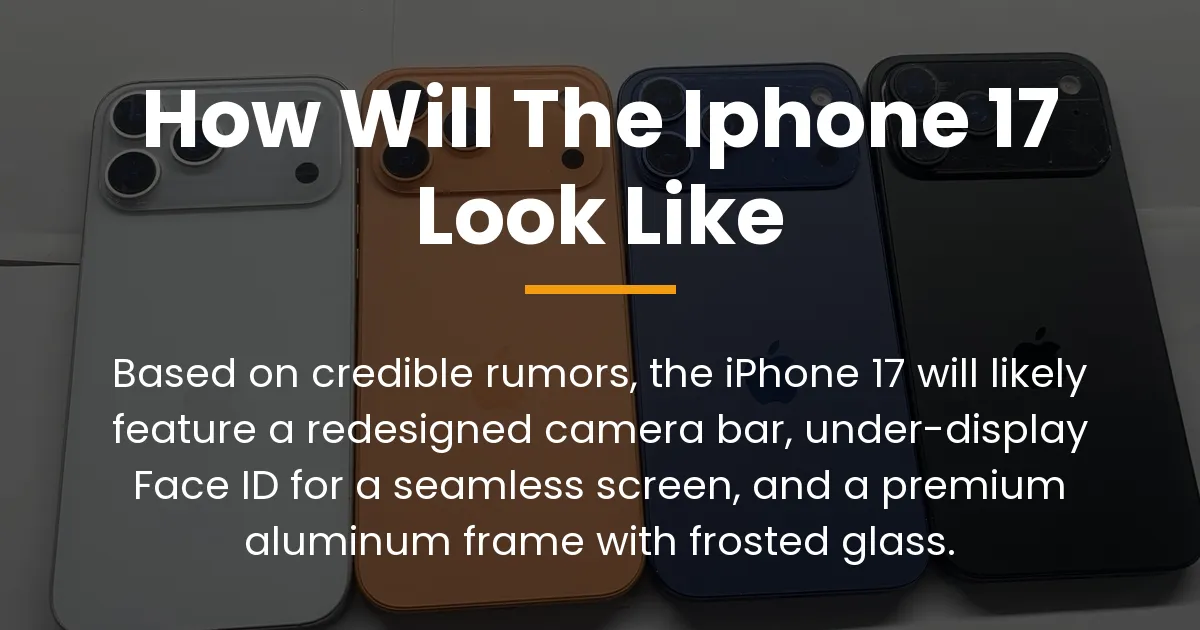
When you ask how the iPhone 17 will look like, you are stepping into the world of educated guesses and supply chain rumors. No one outside of Apple knows for certain yet. However, by piecing together the most credible leaks from reliable analysts and looking at Apple’s own design history, a very compelling picture emerges. The next iPhone is not expected to be a complete reinvention but rather a significant refinement, focusing on a cleaner aesthetic and smarter engineering that could change how you interact with your device.
The Rumored Form and Visual Design
If the rumors hold true, the overall shape of the iPhone 17 will feel familiar but with some striking new details. From the front, the biggest change could be the long-awaited arrival of a truly seamless display. Instead of the Dynamic Island cutout or a single camera hole, Apple might finally move the Face ID sensors beneath the screen. This would mean no cutouts or islands breaking up your view, just a pure, uninterrupted slab of glass for watching videos or playing games.
Turning the phone around is where you would see the most dramatic shift. The familiar separate camera bumps are rumored to be replaced by a single, horizontal camera bar. Think of a sleek, elongated oval that houses all the camera lenses and sensors in one unified module. This bar would sit flush against the phone’s frosted glass back, creating a much smoother and more continuous look compared to the raised bumps of today.
The sides of the iPhone 17 are expected to continue with a flat-edge design, but the material might shift. While Pro models recently adopted titanium, the standard iPhone 17 could use a high-quality aluminum frame. This material keeps the phone light and helps with cellular and Wi-Fi signal strength. You will still find the familiar buttons, though the versatile Action Button from the Pro models might become standard across the entire lineup.
The Front Display and Face ID
The quest for a perfect, all-screen front is a major goal for smartphone makers. For the iPhone 17, this could mean the TrueDepth camera system, which powers Face ID, becomes invisible. This technology, called under-display Face ID, hides the infrared camera and dot projector behind the active screen area. When you need to unlock your phone, the sensors work through the display pixels.
This design choice solves an aesthetic problem but introduces engineering challenges. Placing complex sensors under the screen can potentially affect the display’s brightness, clarity, or viewing angles. Apple’s solution would need to ensure that the excellent OLED display quality, known for its HDR brightness and color accuracy, does not suffer. If done right, you get a cleaner look without sacrificing the security or speed of Face ID.
The Rear Camera and New Housing
The move to a camera bar is more than just a new look. From an engineering standpoint, a single, elongated housing could offer greater structural rigidity to protect the sensitive camera modules inside. It also allows for better internal organization. Engineers can arrange lenses, sensors, and the upgraded A19 Pro chip’s image processing components more efficiently along this bar, potentially improving thermal management during heavy use like spatial audio capture or video recording.
For you, this redesign has practical effects. A camera bar might make the phone sit more flatly on a table, reducing the wobble when you tap the screen while it’s lying down. The frosted glass back, which should continue from the iPhone 16, feels less slippery and hides fingerprints better than a glossy finish. While the core camera specs like improved low-light performance are software and chip-dependent, the new bar is the physical foundation for future camera innovations.
The Function Behind the New Form
Every change on the iPhone 17, if real, is driven by a purpose. Apple does not alter a successful design lightly. The shifts we are discussing aim to solve specific problems, improve the user experience, or pave the way for new technologies. Understanding this “why” makes the speculation much more meaningful than just a list of possible features.
Take the rumored camera bar again. Why would Apple unify the cameras into one strip? Beyond aesthetics, it can simplify the manufacturing process. A single module is potentially easier to build and install. More importantly, it could be designed as a self-contained unit, making repairs quicker and more modular. This aligns with a broader industry push towards right-to-repair. The design also creates a distinct new identity for this model, setting it visually apart from the last few generations at a single glance.
The potential slight size increase, another common rumor, is also functional. A few extra millimeters in the device’s dimensions can be used to house a larger battery. This directly addresses the constant user demand for a significant battery life boost. More internal space also allows for better cooling systems to support the powerful, heat-generating A-series chips, ensuring sustained performance during intensive tasks.
Materials and Daily Experience
The choice between an aluminum frame, a stainless steel one, or titanium is a careful trade-off. Aluminum, strongly rumored for the standard iPhone 17, is lightweight and excellent for radio frequency transparency. This means your 5G, Wi-Fi, and GPS signals pass through with less interference, potentially leading to stronger, more reliable connections. It’s also less expensive, which could help Apple manage its price point.
Compare this to stainless steel, which feels more premium and dense but is heavier and can slightly hinder signal. Titanium, used in recent Pros, offers a great strength-to-weight ratio and a unique, brushed feel. By potentially reserving titanium for the Pro models and using aluminum for the standard iPhone 17, Apple creates a clearer material and feel differentiation within its iPhone lineup. The frosted glass back complements these frames by providing a secure grip.
Software and Hardware Symbiosis
The design is not just about the physical shell. Rumors about Apple Intelligence and new camera features like enhanced Portrait Lighting or spatial audio sound recording require hardware that can support them. A more powerful chip like the A19 Pro needs efficient thermal design, possibly influenced by the camera bar’s layout. A seamless front display enables more immersive software experiences, from full-screen video calls with Center Stage to gaming with no visual interruptions.
Even the Action Button’s potential move to all models shows how design enables function. Giving users a customizable hardware button for daily workflows, camera control, or shortcuts app activation changes how you interact with the device without even unlocking the screen. This is a clear case of a physical design element created purely to enable faster, more personalized software access.
Weighing the Design Evolution
So, are these changes revolutionary or just a nice tweak? Based on the rumors, the iPhone 17’s design evolution appears to be a substantial iterative leap, not a complete overhaul. It follows Apple’s pattern of introducing a new design language and then refining it over several years for better function and manufacturing.
The move to a camera bar and under-display Face ID would represent the most significant visual change since the introduction of the flat-edge design with the iPhone 12. It changes the phone’s silhouette and front-face appeal dramatically. However, the core experience of using iOS, the quality of the apps, and the performance will feel like a natural and powerful progression from the iPhone 16.
Comparison to Current Models
If you hold an iPhone 16 next to a rumored iPhone 17, the differences would be immediately obvious. The front would be all screen versus a screen with a Dynamic Island. The back would show a distinct horizontal bar versus separate circular bumps. The feel in the hand might be slightly larger and the weight could differ based on the material choices, with aluminum likely making it lighter than a stainless-steel predecessor.
For a Plus iPhone or Pro Max user, the size upgrade might be minimal, but the visual redesign would be the main event. The practical question of case compatibility arises here. If the camera module is radically reshaped into a bar, it is very unlikely that your old iPhone 16 case will fit the iPhone 17. You should plan to get a new case, which will be designed to match and protect the new contours.
Practical Impact on Your Use
Let’s address the key question from a user’s perspective: how will this change my day? The seamless display means more immersive content with no distractions. The camera bar may make the phone more stable on surfaces. The material choice affects the phone’s weight in your pocket and its grip in your hand. The potential for better battery life from a size increase directly translates to less charging anxiety.
Many wonder if these changes matter once a case is on. While a case will cover the back materials and frame, the front display experience and the camera bar’s flat profile will still be noticeable. The feel of the buttons, the overall thickness in your hand, and the way the phone sits on a table will all be influenced by the underlying design, case or no case.
Navigating the Rumors and Looking Ahead
With so many leaks, it is crucial to know how to separate likely facts from pure fantasy. Reliable information usually comes from a consistent track record of accurate analysts and from leaks of early dummy models or CAD files used for case manufacturing. These often give us the best look at the coming redesign, as we have seen with recent iPhone 17 Pro dummy model images.
Treat any rumor about specific software features like a new field swipe gesture or exact battery hour gains with more skepticism, as these are harder to pinpoint from supply chains. Focus instead on the broader strokes: the overall shape, the placement of cameras, and the display technology. These elements are locked in much earlier in the manufacturing process, which starts many months before the expected announcement in September.
The final, confirmed design will be revealed by Apple at its annual fall event. Until then, use this framework of understanding the “why” behind each rumored change. Ask yourself if a new feature solves a real problem or enhances your experience. This will help you decide if the iPhone 17’s potential new look is a meaningful upgrade for you or if you are happy with your current device.
Frequently Asked Questions
Will the iPhone 17 design make it heavier or lighter?
If Apple uses an aluminum frame as rumored, the iPhone 17 could be lighter than a model with a stainless steel frame. However, any slight size increase for a larger battery might add a little weight back. The net effect is expected to be a phone that feels similar or slightly lighter in the hand.
If the iPhone 17 has a camera bar, will my old iPhone cases still fit?
No, they almost certainly will not fit. A redesign from separate camera bumps to a continuous camera bar changes the cutout shape and likely the phone’s exact dimensions. You will need to purchase a new case designed specifically for the iPhone 17.
How reliable are these iPhone 17 design leaks?
The leaks about major physical elements like the camera bar and under-display Face ID come from analysts with good historical accuracy and early manufacturing sources. While not 100% guaranteed, they are considered highly credible. Details about software or specific performance numbers are less reliable at this stage.
Does a frosted glass back feel different than a glossy back?
Yes, it feels noticeably different. A frosted glass back has a matte, textured feel that is less slippery and resists fingerprint smudges much better than a smooth, glossy glass back. It provides a more secure grip and maintains a cleaner appearance with daily use.
Would under-display Face ID be less secure?
It is highly unlikely to be less secure. Apple would not compromise the security of Face ID, a critical feature. The technology is designed to work through the display pixels without reducing the accuracy or speed of the facial recognition scan that keeps your device safe.