Your Android phone is frozen, unresponsive, or completely locked, and you need a fresh start. You might be searching for a way to fix it using the only physical controls you have left. Yes, you can perform a factory reset on an Android using the power button, but it is not a simple one-button trick.
This method is a lifeline for when your phone’s screen is black or your password is forgotten. It involves using the power button in combination with other keys to trigger a special recovery menu. This complete guide will walk you through the exact steps, explain what to do when things do not work, and prepare you for what happens after the reset is complete.
What to Know Before You Press Any Buttons
A factory reset using hardware buttons is a powerful tool, but it is not your first option. Think of it as an emergency brake for your phone. You pull it only when the normal controls have failed. If your phone turns on and you can still navigate to the settings app, that is always the safer and clearer way to reset.
This button method is designed for true emergencies. It is for when your phone is stuck in a boot loop, endlessly restarting without reaching the home screen. It is the solution when the screen is frozen and does not respond to touch. Most commonly, it is used to bypass and remove a forgotten PIN, pattern, or password when you are locked out of your device.
The most critical thing to understand is that this process is permanent and destructive. A factory reset using this method will erase all user data from your device’s internal storage. This includes your photos, text messages, downloaded apps, and their saved information. It returns the phone to the state it was in when it first left the factory.
Before you begin, you must try to secure your data. If the phone is partially working, check if your photos are backed up to Google Photos or if your contacts are synced to your Google account. The reality is that if you are using this method, a backup may not be possible, and you must accept that your personal data will be lost.
Finally, ensure your device has enough power. The process can take several minutes, and if the phone dies in the middle, it could cause serious software problems. Try to have at least a thirty percent charge. If the battery is dead and the phone will not charge or turn on at all, this method likely will not work until you can get some power into it.
The Correct Way to Factory Reset Android Using Power Button
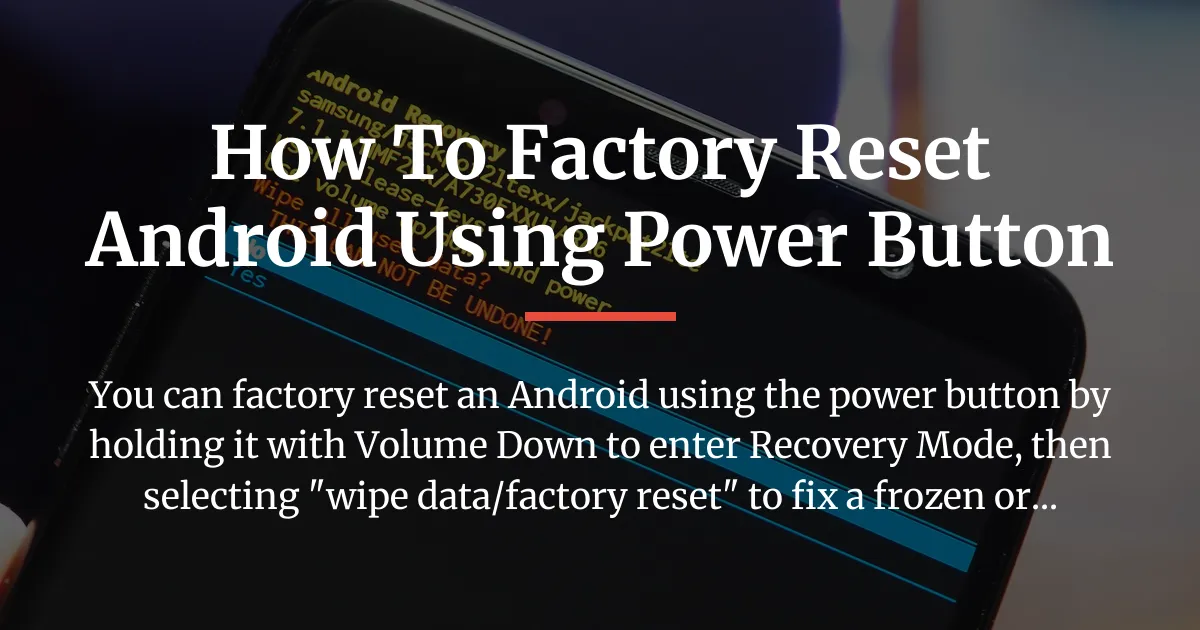
You can factory reset an Android using the power button by first powering the device off completely. Then, press and hold the Power button and the Volume Down button together to boot into Android Recovery Mode. Use the volume keys to navigate to the “wipe data/factory reset” option and select it with the power button to erase everything.
This is the standard procedure that works for many Android phones from brands like Motorola, Nokia, and some older models. Follow these steps carefully.
Step 1: Power Off Your Phone Completely
Your first task is to make sure the phone is all the way off. If the screen is frozen but lit up, you need to force a shutdown. Press and hold the Power button and the Volume Down button together for about ten to fifteen seconds.
Keep holding until you feel a vibration or see the screen go completely black. This action forces a hard shutdown, similar to pulling the plug on a computer. Once the device is off, you can proceed to the next step.
Step 2: Boot into Android Recovery Mode
Now, with the phone powered off, you will press a specific button combination. Press and hold the Power button and the Volume Down button at the same time. Do not tap them; hold them down firmly.
After a few seconds, you should see the manufacturer’s logo appear on the screen. At this point, you can release both buttons. The phone will then enter a special black-and-white menu called Android Recovery Mode. This menu is controlled entirely by the physical buttons.
Step 3: Navigate and Select the Reset Option
You will use the volume buttons to move up and down the list of options. The power button acts as the “select” or “enter” key. Use the Volume Down button to scroll down the menu until the highlight is on the line that says “Wipe data/factory reset.”
Once that option is highlighted, press the Power button one time to select it. This will not start the reset immediately. It will take you to a confirmation screen.
Step 4: Confirm the Factory Data Reset
The next screen is a final warning. It will ask you to confirm that you want to erase all user data. Again, use the Volume Down button to navigate. The highlight will often be on the “No” option by default.
Scroll down to highlight “Yes” or “Factory data reset.” Then, press the Power button to confirm your choice. The phone will now begin the irreversible wiping process.
Step 5: Reboot Your Device
You will see the progress on the screen. When it is finished, the menu will return, often with a message saying “Data wipe complete.” The highlighted option will now be “Reboot system now.”
Simply press the Power button one more time to select it. Your phone will restart. This first reboot will take longer than usual, as it is loading the factory-fresh operating system for the first time.
When the Standard Button Combo Does Not Work
The Power and Volume Down method is common, but it is not universal. Many phone models use a different key combination to access Recovery Mode. If you held the buttons and nothing happened, or you saw a different screen, your device likely needs a different approach.
Manufacturers like Samsung often use a three-button combination. For most modern Samsung phones, you need to press and hold the Power button, the Volume Up button, and the Bixby or Home button all at the same time. Release them when you see the Samsung logo to enter the recovery menu.
For Google Pixel phones, the process is different. Turn off the phone, then press and hold the Power button and the Volume Down button. This will start the phone in a special mode called the bootloader. From there, use the volume keys to highlight “Recovery Mode” and press the power button to select it.
You may also encounter a screen that says “No Command.” This is a normal part of the Android Recovery system but it looks like an error. Do not panic. From this screen, press and hold the Power button for a second, then, while still holding Power, tap the Volume Up button once and release both.
This key press will unlock the full recovery menu, allowing you to see the “wipe data/factory reset” option. If your buttons seem completely dead, the last resort is to let the battery drain to zero. Once the phone is fully dead, plug it into a charger and immediately try the correct button combination again.
Setting Up Your Phone After the Reset
Your phone has now been wiped clean. When it finishes rebooting, you will be greeted by the original setup wizard, just like when it was brand new. This is the most neglected part of the process, and knowing what to expect is crucial.
The first screens will ask you to choose a language and connect to a Wi-Fi network. You must connect to Wi-Fi to proceed with setting up a Google account. This is the moment you confront the reality of your data loss.
The system will ask if you want to copy apps and data from an old device. If you had Google’s backup service enabled on your old phone, this is where you might be able to restore some information. You will be prompted to sign in with the same Google account that was on the phone before.
It is important to manage your expectations here. A Google backup typically restores your installed app list, your Wi-Fi passwords, and some system settings. It rarely restores the data inside your apps, like game progress or login sessions. Your photos are only restored if they were backed up to Google Photos before the reset.
If you had no backup, you must choose “Set up as new.” This is also the recommended choice if you are selling the phone or giving it away, or if the reset was to fix a severe malware infection. You are starting with a completely clean slate.
Your immediate next steps should be to re-download your essential apps from the Google Play Store. You should also immediately go into your settings and set up a new screen lock for security. Take this fresh start as an opportunity to only install the apps you truly need, which can often make an older phone feel faster and more responsive.
Frequently Asked Questions
Does a factory reset using the power button delete everything?
Yes, it deletes all personal data from the phone’s internal storage, including accounts, photos, messages, and apps. It usually does not touch files on a removable SD card unless you select a specific option for that in the recovery menu.
Can I recover my photos after a factory reset done this way?
Once the reset is complete, recovering your photos is nearly impossible without a previous backup. The data is securely erased. This is why checking for a Google Photos backup before the reset is so important.
What is the difference between a hard reset and a factory reset?
People often use these terms to mean the same thing: erasing all data. Technically, a “hard reset” can sometimes mean just forcing the phone to restart. A “factory reset” always means wiping the data and returning to factory settings.
Will this process remove a forgotten password?
Yes, removing a forgotten PIN, pattern, or password is one of the main reasons to use this method. It completely bypasses the lock screen by erasing all data, including the security settings that created the lock.
What should I do if I see a “No Command” screen?
This is normal. Press and hold the Power button, then tap the Volume Up button once. Release both buttons to reveal the hidden recovery menu where you can select the factory reset option.
Is using the power button method safe for any Android phone?
It is a standard Android feature, so it is safe for the software. However, because it erases data without the usual on-screen warnings, you must be absolutely sure you want to proceed before starting.
How long does a factory reset using buttons take?
The process usually takes between two and ten minutes, depending on how much data was on the phone. The first reboot after the reset will also take several minutes to complete.
Do I need a computer to factory reset with the power button?
No, a computer is not needed for this method. It is performed entirely using the phone’s own hardware buttons and recovery software, which makes it useful when you have no other tools available.
My phone is off and will not charge. Can I still use this method?
No. The phone needs some battery power to turn on and enter Recovery Mode. If it will not charge or show any sign of life, you likely have a hardware issue that a factory reset cannot fix.
What is the first thing I should do after my phone finishes resetting?
After the initial setup, the first thing you should do is set a new screen lock for security. Then, connect to Google Photos and your other accounts to see what, if anything, can be synced back to your device.
Conclusion
Knowing how to factory reset an Android using the power button is a vital skill for dealing with a malfunctioning device. It is the definitive solution for a phone that is locked, frozen, or stuck. This guide has provided the steps, prepared you for different device models, and shown you what to do after the reset is complete.
Remember that this is a powerful last resort. It wipes your data cleanly and permanently, offering a fresh start when all other options are gone. Use this knowledge carefully to regain control of your device and move forward.